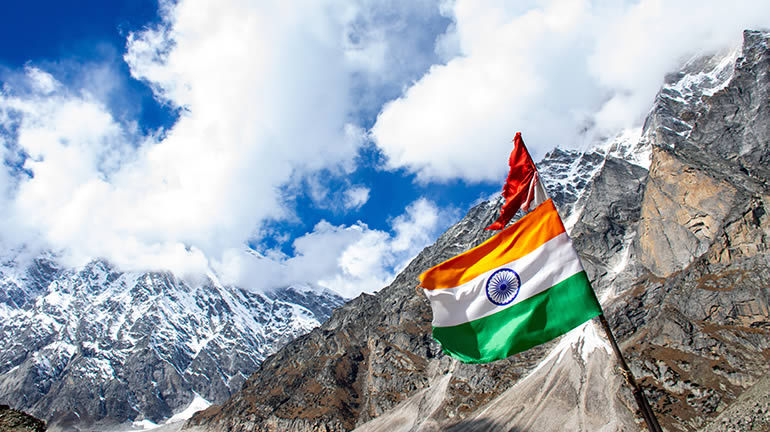
Role of Mountains in India
- October 2, 2020
“Live close to nature and you’ll never feel lonely”
– Ruskin Bond
Our motherland is home to some of the most majestic as well as magical mountain ranges. Be it the mighty Himalayas in the north or the Western Ghats on the west coast or the old Aravallis- every mountain is unique in its own way and has some major role to play. These mountains play an incredible role in influencing the Indian tourism and are considered paradise by the adventurous and nature-loving people. But are you aware of the fact that these mountains play a role in maintaining the climate, rainfall, economy, and many other critical issues that you had no clue about? One often visits the surreal hill stations to soak themselves in spirituality and enjoy a serene stay but these mountains have a larger role in the formation of our country apart from being gorgeous tourist attractions!
Let’s take a look at some of the most vital roles of the mountains:
Climate
The mountains of India play a huge role in controlling the climate of India and bring rainfall to it. It is because of the mountains that some places get optimum rainfall and are great for agriculture.
The Himalayas cover the entire north from Jammu & Kashmir to North-East India and it is because of the Himalayas that the cold harsh winds get deflected and cannot enter India. Moreover, they intercept the monsoon winds that come from the oceans of the Arabian Sea and Bay of Bengal leading to rainfall in the great fertile Northern Plains.
The Western Ghats stop the southwest monsoon winds and are responsible for causing a lot of rainfall.
Barrier
No matter how much modern warfare tech is created- no one can ever deny the role of mountains when it comes to Indian defense. Mountains stand as a tall barrier and protect us from all sorts of invasions or even chances of it.
The Himalayas stand as a natural barrier and protect us from the neighboring countries. The Aravallis help in the prevention of spreading deserts while the Western and Eastern Ghats stand as a tall barrier on the west and east coast respectively.
Biodiversity
Indian mountains help in maintaining the biodiversity of India. They are responsible for green India to a large extent. They also preserve a lot of plants and animals. Most of these animal species are endangered while the plants are rare. Many medicinal herbs are also found in the heart of these mountains that are used to treat deadly diseases.
The biodiversity of the Western Ghat is incredibly mention-worthy as they are home to 30% of India’s flora and fauna which is more than any other mountains. Apart from being acknowledged as a UNESCO World Heritage Site, the Western Ghats have also made their name in one of the top 10 biodiversity hotspots of the world.
The snow leopards of the Himalayas are a unique species and are found there only. The Aravalli is responsible for the greenery in the otherwise desert district of Rajasthan.
Religion and Mythology
The Indian mountains have a huge part in our mythology. We have most of our temples in the mountains and they are considered extremely sacred by us. Our mountains have great influence in Hindu, Islam as well as Buddhist religions.
The Vindhyas, Satpuras, and the Himalayas have a special mention in our religious books also. Most of the well-known temples of India are lines along the Eastern and Western Ghats. The Karakoram receives a lot of Buddhist pilgrims throughout the year as there are a lot of monasteries embedded there.
Bonus fact: The Vindhyas and the Himalayas are the only two ranges of India that are mentioned in our National Anthem too!
Rivers
India is a country filled with rivers. We even worship rivers and consider them sacred. In such a case the mountains play a huge role as they are the sources of most of the Indian rivers.
The Ganga and Yamuna of the Himalayas play a vast role in making the Northern Plains of India fertile and are worshipped by the people of India.
The Eastern Ghats have the mighty Godavari, Krishna, and Kaveri which are the main rivers of the south.
Hydroelectricity
Hydroelectricity is something that is slowly gaining popularity in India. And, the Indian mountains have an enormous role in producing the hydroelectricity of India. The mountains have natural waterfalls that come down from a huge height and are appropriate for producing hydro-power.
The Eastern Ghats produce a lot of hydro-electricity in India. The Purvanchal and the Western Ghats also account for the production of hydroelectric power.
Tourism
It is a well-known fact that mountains bring tourism to India. Be it the breathtaking snow scattered spots of the Himalayas or the lush green forests of the Western Ghats or even the gorgeous areas of Aravallis- people have a tendency to visit hill stations. They are even considered the mecca for trekkers and mountaineers.
Places like Manali, Munsiyari in the north, Araku Valley in the east & Kerala, Karnataka in the south receive huge amounts of tourists throughout the year. Just like people prefer ice climbing at Gulmarg, rock climbing in the Satpuras of Madhya Pradesh is equally popular. People treat Coorg of the Western Ghats as a weekend getaway for camping, fishing, and spending some quality time. Ladakh of the Karakoram is considered as paradise by the adventurous souls and gets millions of tourists that involve Indians and foreigners as well. Trekkers long to visit the Chadar Trek and it is such an expedition that receives thousands of people.
In this way, the mountains of India enrich our tourism industry and are beneficial economically.
Minerals
The mountains are filled with minerals. Mining is one of the leading industries in India and mountains are the source of that. Tertiary rocks are filled with precious minerals.
Copper, lead, zinc, nickel, cobalt, antimony, tungsten, gold, silver, limestone, semi-precious and precious stones, gypsum, and magnesite are some of the most important Indian minerals found in the mountainous regions.
But people are going to extremes to exploring all these minerals and as a result of which the Aravallis are slowly vanishing. Many of the Himalayan areas are also being exploited for this very reason.
Agriculture
The mountains further help in the economy by enriching the agriculture of the country. We all know India is a land of agriculture and it is the main livelihood of the people of most of the regions. The mountains play a huge role in making the land fertile and making the climate suitable. As a result of which there is a vast variety of crops grown in different parts of the country.
The whole North India has the best quality of rice and wheat while the North-East states are well known for their orchards. Assam has the best tea for the Purvanchal and the Brahmaputra river while the Coorg in the south is perfect for coffee plantations. The cardamom estates of the Western Ghats are also well-renowned. Apple orchards of Shimla are quite favored. Many of these fruits and crops are imported to foreign lands as a result of which the Indian economy is uplifted too.
Now you know that the mountains are just not a treat to the sore eyes but are also essential for our everyday life. Our economy, as well as culture, are heavily influenced by these Indian mountains. They can be called the soul of India.
